
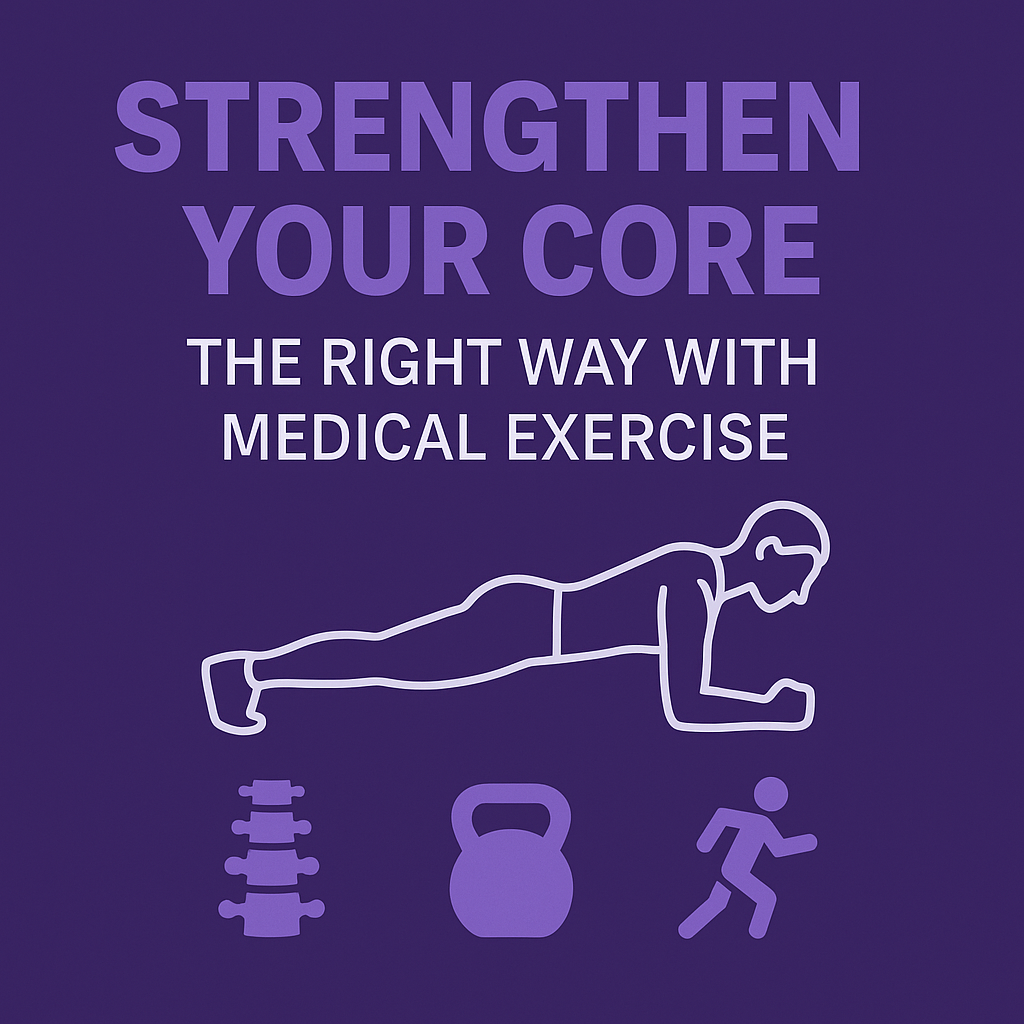
When it comes to core training, many people think of crunches and sit-ups — exercises that primarily target the abdominal muscles. However, this approach can often lead to frustration and even back pain. The truth is, your core is far more complex than just your abs. It’s a network of roughly 29 muscles that not only stabilize your spine but also support efficient movement and transfer force between your upper and lower body.
For those focused on medical exercise, understanding this complexity is crucial. The right core exercises, done correctly, don’t just enhance aesthetics—they protect your spine, improve posture, and create the foundation for functional movements in daily life.
Start with Stability for Lasting Health Benefits
Before loading the spine with weight or engaging in high-impact movements, the first step in core training should be to build stability. This is essential for anyone dealing with chronic conditions or recovering from injury. Stability exercises help you learn how to stabilize the spine while allowing other parts of the body to move.
Simple but effective exercises like planks, glute bridges, side planks, and bird dogs teach your body to control movement and prevent injury. These exercises, though not flashy, are incredibly effective when done with proper form. Start with short holds, focusing on squeezing the glutes, engaging the abdominals, and aligning your body from head to toe.
Tip: Ensure that your posture is in check during these exercises. A slight dip in the hips or rounding of the shoulders can lead to strain on your spine, which can set you back in your recovery. If you feel pain or discomfort, it’s important to reassess your form and focus on controlled, intentional movement.
Move in All Directions for a Well-Balanced Core
Once stability is achieved, it’s time to progress. Core training should involve movement in all directions—flexion, extension, rotation, and lateral flexion. This balanced approach strengthens not only your abs but also the muscles surrounding your spine, hips, and shoulders, all of which work together to support your body during everyday activities.
Rather than relying on exercises like crunches, incorporate moves that engage your entire core, such as slow sit-ups, extensions, and controlled rotations. These exercises build strength through your spine, improving your posture and protecting your back.
Core Training for Real-Life Functionality
In medical exercise, we emphasize the importance of functional movement—the ability to use your core muscles to perform daily tasks. Your core is not just there to look good; it helps you lift heavy objects, carry groceries, play with your kids, and even walk without pain.
Training your core effectively means focusing on its role in maintaining balance and protecting your spine. The muscles that support your body are often invisible and deep within the torso, but they play a vital role in your overall health and well-being.
Train Smarter, Not Harder
- Start with Stability – Build a foundation with simple movements like planks, glute bridges, and side planks. These exercises teach you to resist movement while keeping the spine stable.
- Add Strength – Once you’ve mastered stability, move on to exercises that challenge the spine, such as slow sit-ups or extensions. Adding weight or resistance can further increase strength and support.
- Incorporate Power – For those who are ready, incorporate dynamic movements like rotational throws or cable chops. These exercises improve power and strength, supporting high-demand activities and athletic performance.
A Final Thought on Core Health
Core training is not just about building a flat stomach. It’s about strengthening the muscles that protect your spine and support your body. Medical exercise emphasizes the importance of training the core to enhance stability, mobility, and overall health—preventing injury and improving quality of life.
Whether you’re recovering from an injury, managing a chronic condition, or simply aiming to feel stronger, remember that core training doesn’t have to be complicated. It can be done anywhere, with minimal equipment, and it’s essential to your long-term health and vitality.
Train smarter, train for life, and let your core work for you—not just for how it looks but for how it helps you move and thrive.
Committed to Your Strength, Health and Wellness,
Valarie!!
Discover more from Valarie Walton
Subscribe to get the latest posts sent to your email.
Thanks I’m going to start these exercises
Thank you, Valarie!