
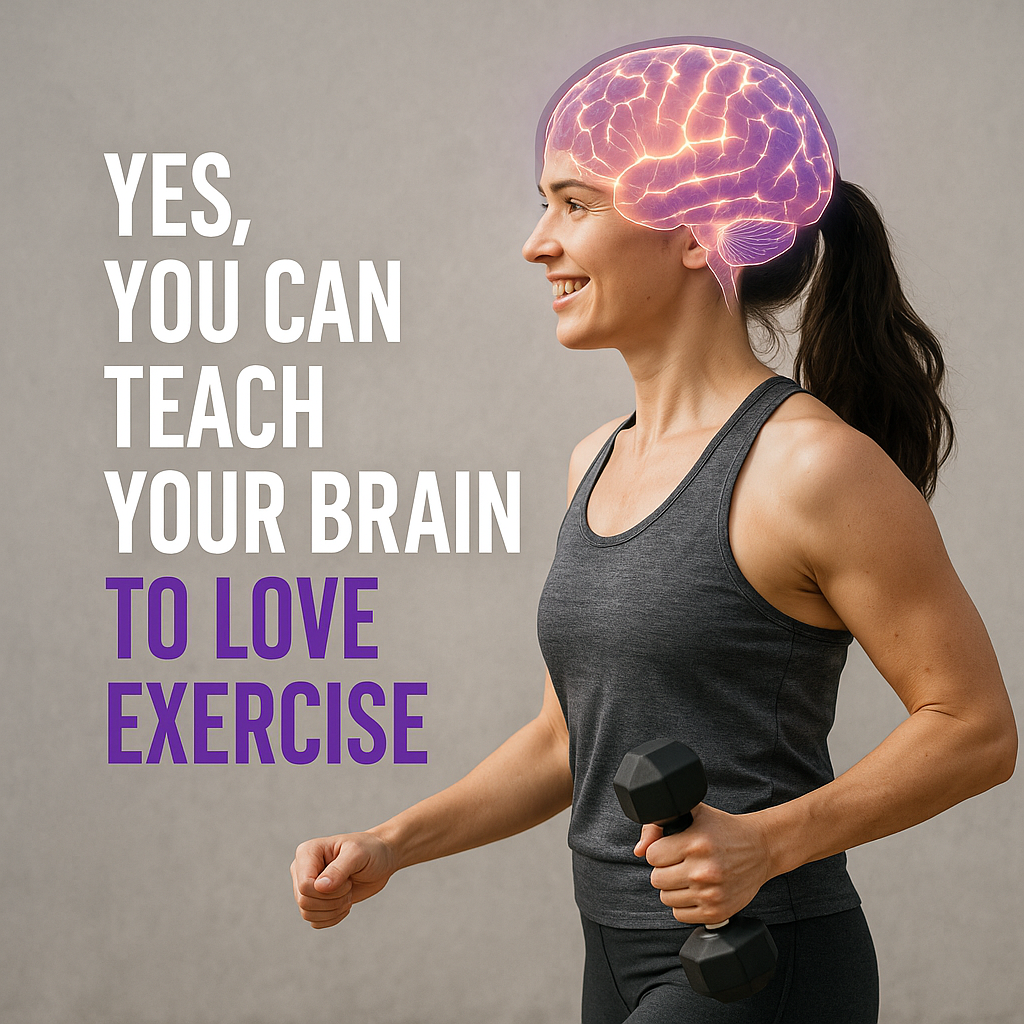
Yes, You Can Teach Your Brain to Love Exercise
For many people, exercise feels like a chore—something you should do, not something you want to do. You know it’s good for your body, that it improves sleep, mood, and focus. But when you’re tired after a long day, those running shoes are easy to ignore.
The gap between knowing and doing comes down to one key factor: motivation. Not the short-lived “pump-up” kind you see in commercials, but the deeper, intrinsic drive that makes movement feel rewarding. The great news? That motivation isn’t fixed—you can train your brain to crave exercise.
Your Brain Learns What to Crave
Our brains are wired to seek rewards. When you pair an action with positive outcomes—like feeling energized, proud, or less stressed—your brain builds connections that nudge you to repeat the behavior.
Unfortunately, many people push too hard at the start, leading to pain, fatigue, or embarrassment. The brain interprets that as a negative experience and avoids it. But when movement is introduced gradually, paired with enjoyment, even subtle benefits can change the brain’s calculations: This feels good. Let’s do it again.
Enjoyment Builds Exercise Consistency
Research shows that enjoyment is the #1 predictor of sticking with exercise long-term. If movement feels rewarding, the brain releases dopamine—the “feel-good” chemical—strengthening the urge to repeat the habit.
Even better? Studies reveal that consistent exercisers weren’t born motivated. Their brains adapted over time through repeated positive experiences.
How to Train Your Brain to Like Exercise
- Start small and simple – Try a 10-minute walk, gentle yoga, or dancing in your living room.
- Focus on how you feel – Notice if you feel calmer, sharper, or more energized afterward.
- Repeat often – Consistency rewires your brain faster than intensity.
- Celebrate the wins – Pride and progress are powerful reinforcements.
Over time, exercise stops feeling like an obligation and starts becoming a natural part of your identity.
Motivation Is Built, Not Born
You don’t need to wait for motivation to magically appear—you can engineer it. With the right cues, consistent repetition, and positive reinforcement, your brain will start looking forward to movement just like it looks forward to coffee in the morning.
Exercise motivation isn’t a personality trait—it’s a habit. And it’s one your brain is perfectly designed to learn.
Committed to your Strength, Health and Wellness,
Valarie
Discover more from Valarie Walton
Subscribe to get the latest posts sent to your email.
Thank you
I’m getting addicted! Love seeing but mostly feeling the results! Thanks